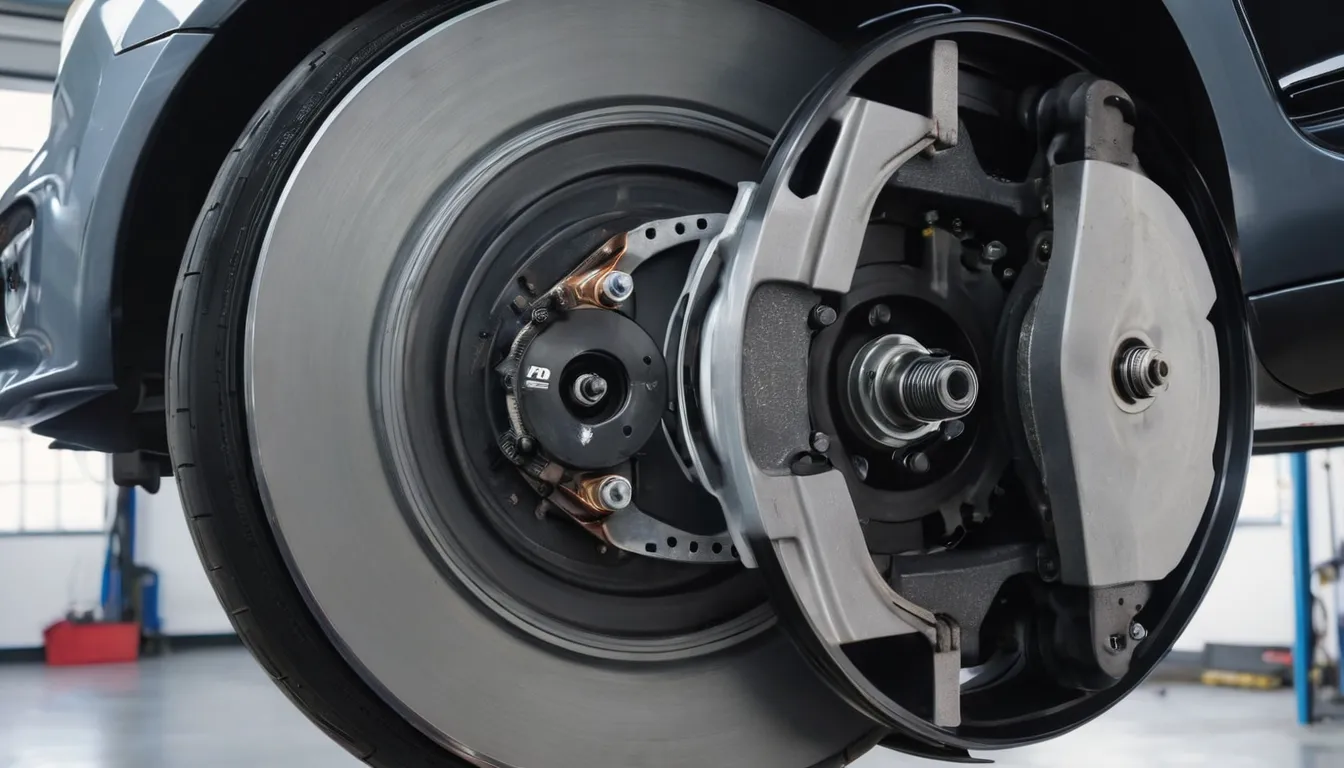
How a brake system works
When you press the pedal, a master cylinder pushes brake fluid through steel lines and flexible hoses to each wheel. Fluid does not compress, so the pressure arrives almost instantly. At the wheel, that pressure squeezes friction material against a spinning metal surface, and the friction slows the car.
Most cars have a brake booster that multiplies the force of your foot, and an anti-lock braking system (ABS) that keeps the wheels from locking during hard stops. The parking brake is a separate mechanism, worked by a cable or an electric motor.
Disc brakes: pads, rotors and calipers
Almost all modern cars use disc brakes at the front, and many use them at all four wheels. A disc brake has three main parts:
- Rotor. A metal disc that turns with the wheel. Some are vented, with fins between two faces to shed heat.
- Caliper. A clamp that holds the pads and contains one or more pistons that push on them.
- Pads. Steel backing plates with a layer of friction material. The pads wear down with use and are the part replaced most often.
Pad materials vary. Organic, semi-metallic and ceramic compounds each trade off noise, dust, wear and performance in different ways. Your owner's manual or a parts counter can tell you what your car was designed to use.
Drum brakes
Some cars and light trucks still use drum brakes on the rear wheels. Curved shoes press outward against the inside of a drum that turns with the wheel. Drum brakes have springs and adjusters that need care during service, which is one more reason to let a shop handle them.
Brake fluid
Brake fluid absorbs moisture from the air over time. Water in the fluid lowers its boiling point and can corrode parts inside the system. That is why many vehicle makers list brake fluid replacement in the maintenance schedule. Use only the fluid type printed on the reservoir cap or in the manual, and never mix types unless the manual says they are compatible.
A falling fluid level can mean the pads have worn, since the caliper pistons sit further out. It can also mean a leak. Either way, have the system checked before topping it up and carrying on.
Warning signs
| What you notice | What it can mean |
|---|---|
| High-pitched squeal when braking | Many pads have a small metal tab that squeals when the pad is nearly worn |
| Grinding or growling | Pad material may be gone, with metal rubbing on the rotor |
| Pulsing or vibrating pedal | Uneven rotor surface or other wear |
| Car pulls to one side | A sticking caliper, uneven pads, or a tire or alignment issue |
| Soft, spongy or sinking pedal | Air or moisture in the fluid, a leak, or a failing master cylinder |
| Brake warning light | Low fluid, a parking brake left on, or a system fault |
Stop and get help. A pedal that sinks to the floor, a brake warning light that stays on, or grinding from the wheels are reasons to stop driving and have the car inspected. If you are unsure, have it towed.
Who should do brake work
Brakes are safety-critical. A mistake with a caliper bolt, a fluid line or a pad that is fitted backward can cause brake failure. Even if you change your own oil and wipers, have a qualified mechanic do brake repairs. You can still help by noting when a noise happens, which wheel it seems to come from, and whether it changes with speed. See DIY or shop and safety for more.